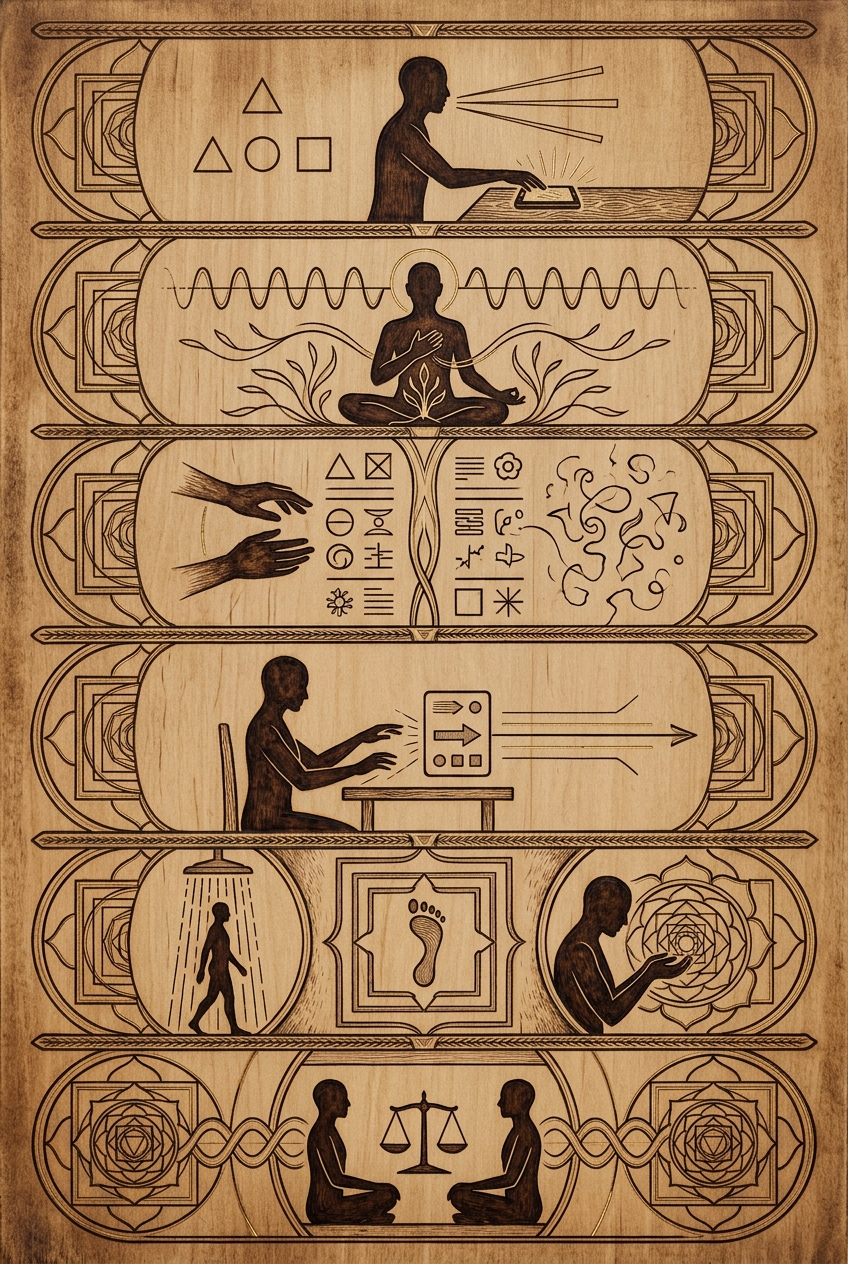
Where to begin
The question “How do I cope with anxiety when my partner is silent?” does not require a rushed answer. Often behind it are fatigue, anxiety, hurt, hope, or a sense that the situation keeps repeating. If you immediately look for a final solution, you may miss what matters most: what is actually happening now, and what small step is truly within your power.
In the spirit of the shastras, it is helpful to begin with sobriety. Do not suppress your feelings, but do not give them the right to govern every action either. Feelings show where it hurts. Reason helps you see what to do. The soul reminds you that a person’s dignity is deeper than any single situation.
What may be inside this situation
Sometimes the sharpness is connected to a specific event: no reply to messages. Sometimes it is a repeating pattern: silence triggers me. Sometimes a person does not understand how to act because everything has become mixed together: how not to panic.
Try, for a minute, not to solve the problem, but to look at it. What is a fact? What is your assumption? Where are you afraid of losing love, respect, safety, or control? Where has the time already come not for more analysis, but for a boundary or an action?
Three simple observations
- •If a thought repeats many times, it does not always become wiser. Sometimes it needs to be written down on paper, followed by a pause.
- •If the action that follows leaves shame or emptiness, it may not be a solution, but a quick way to reduce anxiety.
- •If you call patience spirituality, but resentment and weakness are growing inside, it is worth looking honestly at whether fear is hiding there.
What to do today
1. Write down the situation in three lines: what happened, what I feel, what I am afraid of. 2. Separate the fact from the interpretation. A fact can be checked; an interpretation is often born from pain. 3. Choose one action that does not destroy either you or the other person: a conversation, a pause, a request, a boundary, or refusing an impulse. 4. For one day, stop the habit that strengthens the cycle: arguing, checking, replaying, blaming, or silently enduring. 5. Ask yourself: “How can I act here with dignity and truth?”
What is better to avoid
Do not make important decisions at the peak of emotion. Do not use spiritual ideas to justify inaction or to endure what is destructive. Do not demand perfect clarity from yourself right away. Sometimes the first step is not the final answer, but an honest pause, prayer, a conversation with a wise person, and one small action.
In the spirit of the shastras
The shastras do not call us to weakness. They teach us to see more deeply: behind the external situation there is the mind, desires, attachments, duty, freedom of choice, and the soul. Practical reason is just as important as gentleness. A pure heart does not mean naivety. Mercy does not cancel boundaries. Humility is not the same as abandoning truth.
If you need a personal path
This reflection offers general support. A personal 30-day plan is needed when you want to apply it to your own life: to your character, circumstances, birth chart, and specific pattern. Then each day becomes not a general phrase, but a small step you can actually live.